
Children – Alder Hey resources
The attached documents and links from Alder Hey may support you when assessing and treating children with minor illnesses and when delivering the Pharmacy First Service in children.
Please see attached the documents and links below:
- PrescQIPP free training link: Prescribing mastery webinars
- Links to resources for Paediatric assessment of minor illness:
- Link to Alder Hey symptom checker > Symptom checker – Alder Hey Children’s Hospital Trust
- Attached here is a copy of the Alder Hey “Big 6” document – this lists the most comment presentations to Urgent Care. Aimed at primary care. It has been agreed regionally, organised around:
- Traffic light system of assessment (for use by clinicians)
- Traffic light for parents /carers with links to resources
- Spotting the sick child: https://spottingthesickchild.com
-
- Colleagues will need to register. This is a really good, free resource endorsed by RCPCH aimed at teaching people the signs of illness in infants and children.
- Paediatric Assessment Triangle: https://dontforgetthebubbles.com/the-paediatric-assessment-triangle/
-
- The assessment triangle is a quick way of assessing whether a child is sick or not. We encourage this as the immediate “eyeball” of every patient to help determine whether the child needs urgent treatment or not. We hope there won’t be many very sick children that are brough into Pharmacies, but the ABCDE framework is a useful one to get used to.
- Video from the DFTB team that talks through it: https://www.youtube.com/watch?v=ZV-ItIkvDXE
- Video from Alder Hey induction materials: https://web.microsoftstream.com/video/c428b0d9-aace-4cfe-a405-fecb59d7035f
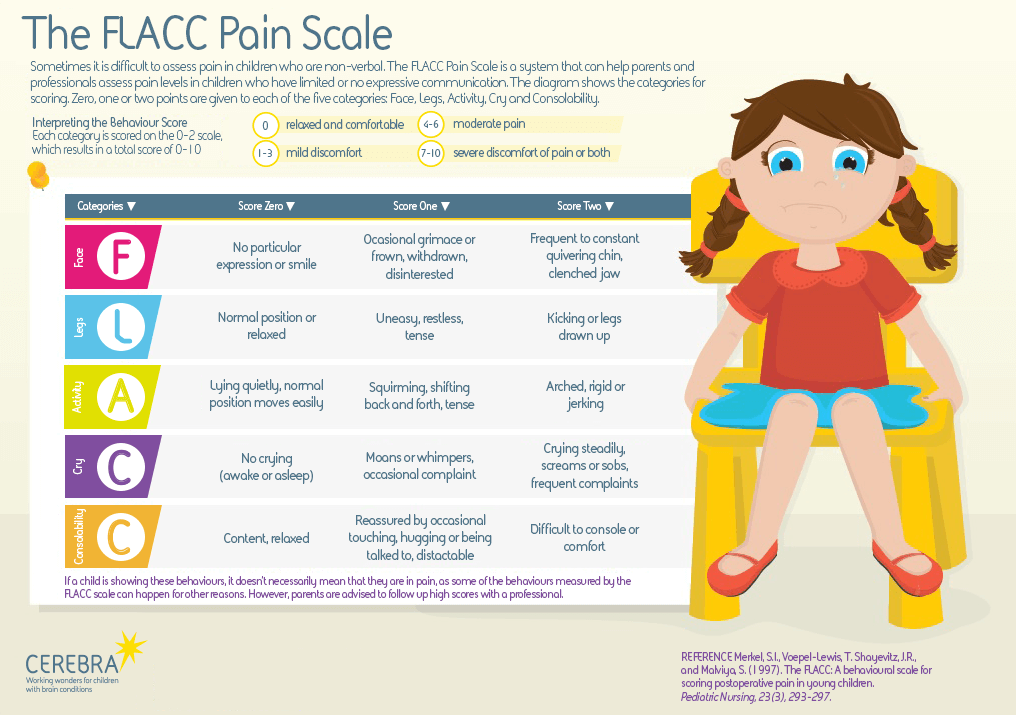
- Pain assessment: This can be difficult in younger children. There are some behavioural (observation based) tools that we can use:
-
- One developed at Alder Hey for use at triage in ED: Alder Hey triage pain cries score
- One that is good for younger children and those with limited communication: https://cerebra.org.uk/wp-content/uploads/2020/02/flacc-infographic-may17.png
- Dehydration: another useful summary from the DFTB team: https://dontforgetthebubbles.com/high-and-dry-assessing-dehydration
-
- Essentially, most of those clinical features aren’t that good as indicators; but better if there are more than one
- From a “do they need to go to hospital because they would do something about it” perspective it really comes down to how unwell then child looks (behaviour/appearance in the Pediatric Assessment Triangle). We also use “not passed urine in the past 12 hours” as part of our safety-netting advice.
- Looking at throats in toddlers: not always easy. Taking a picture with a phone (and the light) can make it easier – get them to do a dinosaur/lion/monster roar
-
- Making it a game can help: https://pediatricanswers.com/cool-trick-seeing-kids-throat/ (I can’t get many to pant like a puppy, but it works on those that will).
- Firm hold by carer often the key for the reluctant although if the pathway is from age 5 years may not be as much of a challenge.